
|
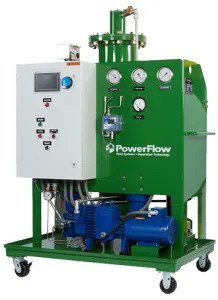
Water and particulate contamination can significantly reduce the performance and service life of lubrication and hydraulic oils. Effective oil dehydration systems remove moisture while high-efficiency filtration controls solid contaminants, helping protect bearings, valves, pumps, gears, and other critical components. PowerFlow XLP Series oil purification and dehydration systems combine water and gas removal with high-capacity particulate filtration in a single unit, providing an efficient solution for maintaining clean, dry industrial oils. Why Water Contamination in Oil Matters Water can enter lubrication and hydraulic systems through condensation, leaking heat exchangers, damaged seals, reservoir breathers, process conditions, and other sources. Once present, moi ... Read more » |
|
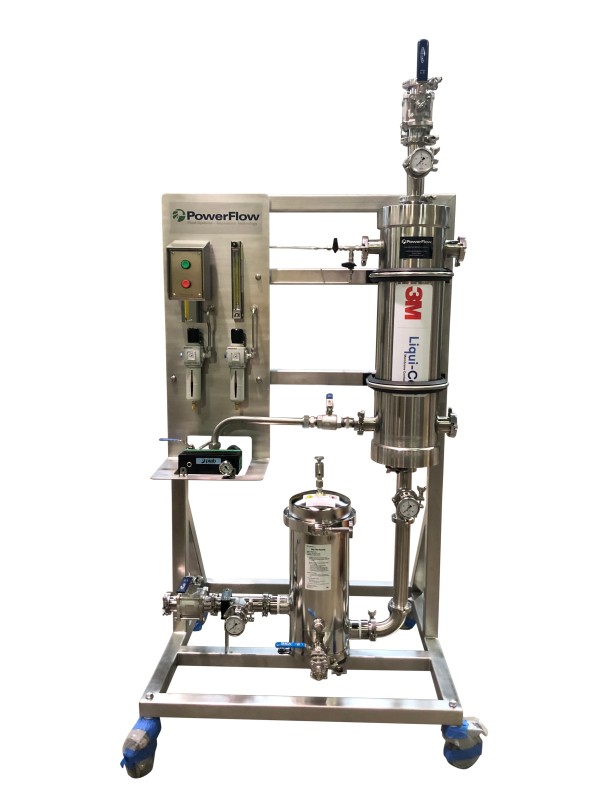
Dissolved gases in process water can contribute to corrosion, oxidation, microbial growth, and product quality problems in industrial applications. Effective water deaeration systems remove dissolved gases such as oxygen and carbon dioxide before they can interfere with equipment or processes. While traditional technologies use heat, vacuum towers, or gas sparging to accomplish this task, membrane contactors provide a compact and precise alternative capable of continuously producing deaerated water. PowerFlow XDO Series water deaeration systems use membrane contactor technology to provide reliable dissolved gas control for applications requiring high-quality process water.
< ... Read more » |
|
... Read more » |
|
When it comes to maintaining the cleanliness and performance of hydraulic and lube oil systems, Vacuum Dehydration Oil Purifiers play an essential role. Clean oil ensures trouble-free operation, reduces downtime, and extends the life of expensive equipment. Contaminated oil can cause premature wear, corrosion, and system failures, leading to costly repairs and poor productivity. |
|
More about water deaeration units here → https://www.pwrfs.com/liquicel_membrane_contactors/.
|
|
Managing water quality in industries that rely on industrial boilers and large volumes of high-purity water can be challenging and time-consuming. However, maintaining strict water quality parameters is essential to optimize operational efficiency, reduce safety risks, and extend the lifespan of critical equipment. Among these parameters, controlling dissolved gas levels in process water is particularly important.
Fortunately, innovative water deaeration systems now make it easier to achieve precise dissolved gas control while offering ease of operation and maintenance.
... Read more » |
|
A significant development is the integration of IIoT (Industrial Internet of Things) technology, enabling remote monitoring, data acquisition, and even troubleshooting. Modern oil purifiers, such as PowerFlow’s XLP Series, offer user interfaces with remote access, allowing operators to manage systems through an internet connection. These features reduce the need for on-site ad ... Read more » |
|
In many industrial applications, the presence of dissolved gases in process water can lead to corrosion, scale formation, and other maintenance challenges. A water deaeration system is crucial for industries requiring high-purity water, as it removes unwanted gases like oxygen and carbon dioxide. Industries can safeguard equipment, improve water quality, and increase efficiency across various processes by using a well-designed water deaeration unit. XDO Series Water Deaeration Systems from PowerFlow Fluid Systems are specially engineered for durability and precise dissolved gas control, making them a reliable solution for the power generation, chemical processing, ... Read more » |
|
Water is an essential component in many industrial processes, and its quality directly affects the outcome of operations and product success. One critical aspect of water treatment is the removal of dissolved gases, especially oxygen, which can lead to problems such as:
This is where water deoxygenation systems can be helpful. What is Water Deoxygenation? Water deox ... Read more » |